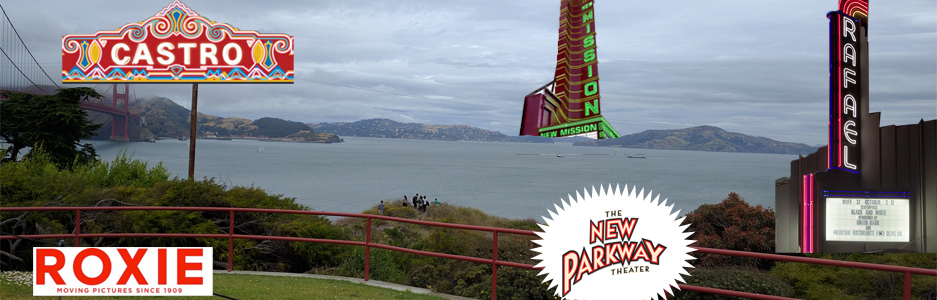
How much moviegoing can a man in his 60s take in a short period of time? Come late May and early June, I think I'm going to find out. This year's San Francisco Silent Film Festival will last a full four days; five if you include opening night (Wednesday, May 30). That's one more day … Continue reading SF Silent Film Fest Bigger (and hopefully better)
Category: Silent Films
Chaplin Diary, Part 8: Early First National
Charlie Chaplin's contract with First National turned him from an employee to an independent contractor. He built his own studio, hired his own employees, and financed his own films. First National just handled distribution. Chaplin was required to produce eight movies of two reels or more, over the course the 18 months. It took him … Continue reading Chaplin Diary, Part 8: Early First National
Chaplin Diary, Part 7: Late Mutual
Extreme perfectionism slowed Chaplin down as he made his last Mutual comedies. Up through Easy Street, his ninth movie with the company, he had managed to meet his contract's one two-reeler-a-month schedule. But he took three months to make The Cure, and another three for The Immigrant. His last Mutual, The Adventurer, took four months … Continue reading Chaplin Diary, Part 7: Late Mutual
Chaplin Diary, Part 6: Middle Mutual
With almost full freedom, Chaplin was able to take considerable time to get his vision on film. According to Peter Ackroyd's biography, Charlie Chaplin, "he spent three weeks on filming one scene alone, in which he kicks his rival while whirling around with a partner on the dance floor." With that sort of perfectionism, it wasn't … Continue reading Chaplin Diary, Part 6: Middle Mutual
Chaplin Diary, Part 5: Early Mutual
What happens to a performer whose contract ends just as they become the most famous and beloved person on the planet? They get tremendous artistic control and an obscene amount of money. When Chaplin signed another one-year contract, this time with the Mutual Film Corporation, he got his own production company and studio, and near … Continue reading Chaplin Diary, Part 5: Early Mutual
Chaplin Diary, Part 4: Late Essanay
During his year at Essanay, Charlie Chaplin became the most famous and beloved person in the world (Mary Pickford was the only significant rival). Movies changed the concept of celebrity, and no one before had ever been famous like Chaplin. Everyone loved him. It was like Beatlemania, except with a universal language and no generation … Continue reading Chaplin Diary, Part 4: Late Essanay
Chaplin Diary, Part 3: Middle Essanay
My last diary entry covered Charlie Chaplin's first five short films at Essanay; the beginning of his second year as a filmmaker. But with his sixth Essanay comedy, The Tramp, Chaplin made a major step towards maturity. Before this seminal two-reeler, Charlie was a funny little man with ill-fitting clothes and a brush mustache. In … Continue reading Chaplin Diary, Part 3: Middle Essanay
Chaplin Diary, Part 2: Early Essanay
According to the Internet Movie Database, Charlie Chaplin directed 71 movies. By my count, he did 64. The remaining seven include recuts of previous films, uncompleted works, "features" that were actually compilations of shorts, promotional films, and what we now call public service announcements. Remove those, and you have 64 original movies. After his year … Continue reading Chaplin Diary, Part 2: Early Essanay
Six Silent Films in One Day
I spent Saturday at the Castro Theater, attending the San Francisco Silent Film Festival's Day of Silents. They screened six feature-length movies, all with live musical accompaniment, starting at 10:00AM and ending a little after 11:00PM. The five intermissions ranged from 30 minutes to an hour. Here's what I saw, in the order I saw … Continue reading Six Silent Films in One Day
Chaplin Diary, Part 1: Directing at Keystone
I'm starting out on a survey of Charlie Chaplin's work. My plan is to view every movie he wrote and directed, in chronological order. Chaplin started his movie career at Mack Sennett's Keystone studio. He entered Keystone late in 1913 with a weekly salary of $150. He left Sennett a year later, with a level … Continue reading Chaplin Diary, Part 1: Directing at Keystone
 Bayflicks