Festival climate for this week: silent but scary. The San Francisco Silent Film Festival runs through the weekend, and Another Hole in the Head continues all week.
I’ve separated the Silent Film Festival listings at the bottom of this newsletter.
A Love and Honor, VIZ Cinema, Sunday, Monday, and Tuesday. Yoji Yamada makes Samurai films like nobody else’s–studies of a highly stratified class system with occasional, well-staged  fights to break up the serious drama. This one concerns itself with a low-level samurai (Takuya Kimura) who loses his eyesight in the line of duty. But this is no Zatoichi fantasy. The combination of emotional depression and looming financial disaster soon strain the protagonist’s once happy marriage. But even a serious samurai film must have swordplay, and events eventually force Shinnojo into a one-on-one battle without benefit of sight. Yamada doesn’t pretend that a blind man can make a brilliant fencer; Shinnojo’s one strategic advantage doesn’t promise a long, Zatoichi-style career fighting for truth, justice, and the Japanese way. For more details, read my full review. A digital, rather than film, presentation.
B Blackmail, Rafael, Monday, 7:15. If you’re not burned out by silent films after the weekend, you can head north to San Rafael for Alfred Hitchcock’s last silent film. (Blackmail was also his first talkie—it wasn’t unusual to make two versions in 1929. I’ve seem both, and the silent one is better.) A young woman commits an indiscretion, putting her in a situation where she has to kill a man in self defense. A witness sees this as a ticket to comfort. This is Hitchcock in an incubator, preparing to blossom a few years later into the master of suspense. By the way, am I the only one who thinks Donald Calthrop, who plays the blackmailer, is a dead ringer for Kenneth Branagh? With live music by The Alloy Orchestra, who accompanied Blackmail when I saw it at the San Francisco International Film Festival in 2006.
A+ Seven Samurai, Pacific Film Archive, Saturday, 7:00. If you think all action movies are mindless escapism, you need to set aside 3½ hours for![7sam_thumb[1]](https://bayflicks.net/wp-content/uploads/2010/02/7sam_thumb1.png "7sam_thumb[1]") Kurosawa’s epic masterpiece. The basic story–a poor village hires warriors to defend them against bandits–has been retold many times since, but Kurosawa told it first and told it best. This is an action film with almost no action in the first two hours. But when the fighting finally arrives, you’re ready for it, knowing every detail of the people involved, the terrain to be fought over, and the class differences between the peasants and their hired swords. One of the greatest movies ever made. See Kurosawa Diary, Part 10: Seven Samurai for further discussion. Part of the PFA’s summer-long Akira Kurosawa Centennial.
Kurosawa’s epic masterpiece. The basic story–a poor village hires warriors to defend them against bandits–has been retold many times since, but Kurosawa told it first and told it best. This is an action film with almost no action in the first two hours. But when the fighting finally arrives, you’re ready for it, knowing every detail of the people involved, the terrain to be fought over, and the class differences between the peasants and their hired swords. One of the greatest movies ever made. See Kurosawa Diary, Part 10: Seven Samurai for further discussion. Part of the PFA’s summer-long Akira Kurosawa Centennial.
A Streetcar Named Desire, Castro, Thursday. It’s been a very long time since I’ve seen Eli Kazan’s film version of Tennessee Williams play—the film that made Marlon Brando a star—so I’m not giving it a grade here. I it would get an A. On a double-bill with The Fugitive Kind, another Williams adaption starring Brando, although in the case, one I haven’t seen. Part of the Castro’s Tennessee Williams on Film series.
A- The Hidden Blade, VIZ Cinema, Sunday, Tuesday, and Wednesday. Another Yoji 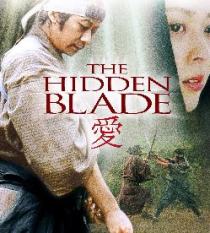 Yamada period film that concerns itself with the daily life of lower-rung samurai at the end of the Tokugawa Shogunate. Masatoshi Nagase stars as a samurai in love with a peasant girl and intimidated by new, western methods of warfare just coming to Japan. Matters get worse when a close friend is accused of treason. The misleading title suggests an action flick, something that The Hidden Blade only becomes–in a calm, meditative way–in the final act. While the film ends a little too happily, it’s still an intriguing, unglamorous look at the warrior’s life. The Hidden Blade will be screened, unfortunately, in digital form.
B+ No Regrets for Our Youth, Wednesday, 7:00. Kurosawa’s first postwar film, the first where he didn’t have to answer to Japanese military censors, is his only work that’s unquestionably political and leaning leftward. It’s also the second and last of his films with a female protagonist. It’s through the eyes of this young, initially apolitical woman that Kurosawa shows us how liberals and radicals were treated by the military dictatorship that suddenly ended the year before this film was made.
A+ North by Northwest, Stanford, Saturday through Tuesday. Alfred Hitchcock’s  light masterpiece, not as thoughtful as Rear Window or Notorious, but more entertaining than both of them combined. Cary Grant plays an unusually suave and witty everyman in trouble with evil foreign spies (who think he’s a crack American agent), and by the police (who think he’s a murderer). And so he must escape almost certain death again and again while chased from New York to Mount Rushmore. On the bright side, he gets to spend some quality time with a very glamorous Eva Marie Saint. Danger has its rewards. On a double bill with the Mae West vehicle, I’m No Angel, which I haven’t seen in decades but remember enjoying.
B Freaks, Red Vic, Tuesday and Wednesday. A morality tale set in a circus sideshow, Freaks presents actual, severely deformed people, and dares you to look at them and accept them as full human beings. It also gives you a good scare. Certainly one of the strangest films ever to come out of that most conservative of studios, MGM.
San Francisco Silent Film Festival
A Metropolis, Castro, Friday, 8:15. The first important science fiction feature 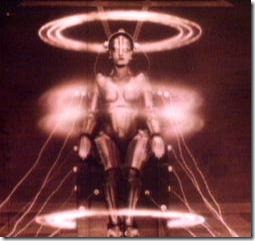 film still strikes a considerable visual punch, and with the latest restoration, tells a compelling story, as well. The images–workers in a hellish underground factory, the wealthy at play, a robot brought to life in the form of a beautiful woman–are a permanent part of our collective memory. Even people who haven’t seen Metropolis know it through the countless films it has influenced. Recently-discovered footage elevates the story of a clash between workers and aristocrats from trite melodrama to a tale of real people in an artificial world. Read my longer report. A digital presentation rather than on film, but accompanied by the Alloy Orchestra. Note: This screening is sold out, but rush tickets are available.
Amazing Tales from the Archives: Lost & Found Films, Castro, Friday, 11:30am., free. The first of two “Amazing Tales from the Archives” programs on this schedule will include the archivists responsible for finding the lost Metropolis footage. See this New York Times article for more on that amazing story of cinematic rescue. Accompanied by Donald Sosin on piano.
B+ The Strong Man, Castro, Saturday, 4:00. Frank Capra’s first feature a a director is also my favorite silent comedy not starring Chaplin, Keaton, or Lloyd. But it does star Harry Langdon, who for a very brief time came close to toppling Chaplin off his throne. Langdon plays the Belgian assistant to a German strong man touring the US. The assistant is also hoping to find his beautiful war-time pen pal. The ultimate innocent child-like man, Langdon makes a mess of Ellis Island, has a shocking (to him, not to the audience) sexual encounter, fights off a cold to the annoyance of everyone around him, and cleans up a small town at the mercy of bootleggers. Charming, extremely funny, and occasionally preachy, The Strong Man shows Capra’s already-considerable talents at the start of his career. Accompanied by Stephen Horne on piano.
The Big Business of Short, Funny Films, Castro, Saturday, 10:00am. I can only vouch for one of the three comic shorts on this program: Big Business. But its one of Laurel and Hardy’s best silents. Accompanied by Dennis James on the Castro’s Wurlitzer pipe organ.
Variations on a Theme, Castro, Saturday, noon. This moderated discussion of silent film accompaniment will include all or most of the musicians performing at this year’s festival.

 Bayflicks
