I’ve been having technical problems recently. And yes, you won’t get the Friday newsletter this week, again. But if you subscribe to The Criterion Channel, I can tell what good movies will leave the Channel before the year ends.
Full recommendations
A+ My Darling Clementine (1946)

By all rules of the western genre, this John Ford masterpiece shouldn’t work. The plot, the primary motivations, and the action all but disappear for the whole middle part of the movie. And yet it’s one of the greatest horse operas ever made. An extremely fictitious version of the shootout at the O.K. Corral, the film becomes myth through a stunningly-photographed Monument Valley. Even though the story feels like legend, the characters seem down-to-earth, and can surprise you with their all-too-human frailties and contradictions. Read my Blu-ray review.
A+ Grand Illusion (1937)

Set mostly in prisoner-of-war camps, Jean Renoir’s masterpiece finds sympathy between both sides of the conflict. Grand Illusion sets such differences as nationality and class against the healing power of our common humanity. The French prisoners and their German guards try their best to be civilized in a world where civilization is all but outlawed. Jean Gabin stars as a French officer of common stock, but you’ll likely remember Erich von Stroheim as an aristocratic German facing the end of his way of life. One of the last WW1 films made before WW2 started. Read my A+ appreciation.
A Dr. Jekyll and Mr. Hyde (1931)
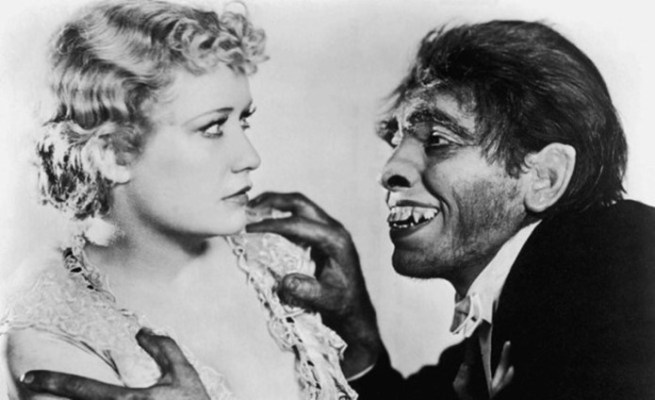
In the depths of the depression and the pre-Code era, director Rouben Mamoulian created the best Jekyll and Hyde movie I’ve yet to see. It displays brilliant photography, extremely slow dissolves, London fog, and makeup effects that seemed impossible with the technology of the time. Fredric March stars as the doctor/brute; the wonderful Miriam Hopkins plays a prostitute.
A- The Mark of Zorro (1940)

After Douglas Fairbanks and before Antonio Banderas, Tyrone Power wore the black mask to save early California from tyranny – and did it with panache. Power, who was bisexual in real life, plays Don Diego as an effeminate fop, and his masked alter ego as dashing masculinity. The movie is witty, fun, politically progressive (for its time), and includes one of the best sword fights ever to kill off Basil Rathbone. A remake of Douglas Fairbanks’ first swashbuckler, and better than the original.
B+ Arsenic and Old Lace (1944)

Here’s the film version of the ultimate black comedy Broadway hit of the 1940s. Two very nice old ladies help elderly, lonely men by killing them with poison. But don’t worry, everyone in the family is a bit off. For instance, brother Teddy thinks he’s Theodore Roosevelt. Director Frank Capra managed to make it look like a movie instead of a stage play. But Capra forced Cary Grant to do too much mugging, and the theater’s final gag disappeared in the film.
B+ Unfaithfully Yours (1948)
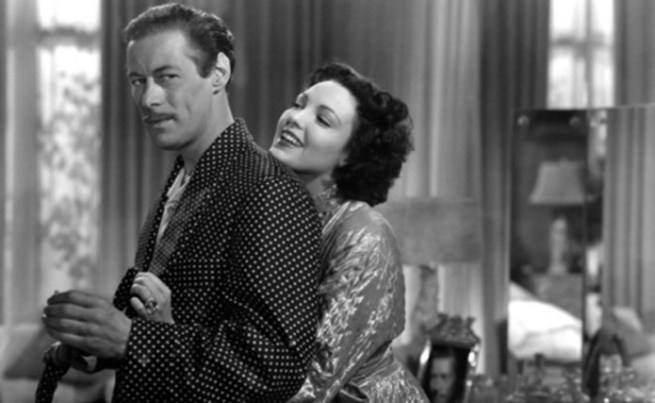
Preston Sturges’ last good movie involves classical music, private detectives, possible adultery, and not quite enough humor. But as the movie goes along, the movie becomes screamingly funny. Rex Harrison plays a famous conductor who suspects his wife is cheating. As he conducts, he dreams of several ways to get rid of his possibly cheating spouse. But when he tries to turn his evil daydreams into reality, everything goes wrong – including a gloriously funny sequence about the problems of technology.
B+ The Black Cat (1934)

A newlywed couple get stuck in a surprisingly modern haunted castle. Boris Karloff and Bela Lugosi want to kill each other – Lugosi wants to skin Karloff alive. Directed by low-rent auteur Edgar G. Ulmer. Quite fun.
B No Way Out (1950)

This is what a message movie looked like in the middle of the 20th century. Sidney Poitier plays the hero, but he doesn’t get star billing. He plays a new doctor in the County Hospital, where he must deal with a family of racist criminals led by Richard Widmark. Things get worse when one of the criminals dies in Poitier’s care. There’s a riot, but we only hear people talk about it. Some extremely implausible incidents ruin the last act. Warning: The n-word is used frequently. Directed and partly written by Joseph L. Mankiewicz.
B Island of Lost Souls (1932)

This early Paramount horror film, based on a story by H.G. Wells, gets by entirely through atmosphere. You’ve got fog, an alcoholic ship captain, the strange island of the title, and a group of creatures that are half-men/half-animal. And, of course, there’s Charles Laughton as the most courteous mad doctor in the history of Hollywood mad doctors. And then there’s the Panther Woman. A short and entertaining horror movie.
B Donnie Darko (2001)
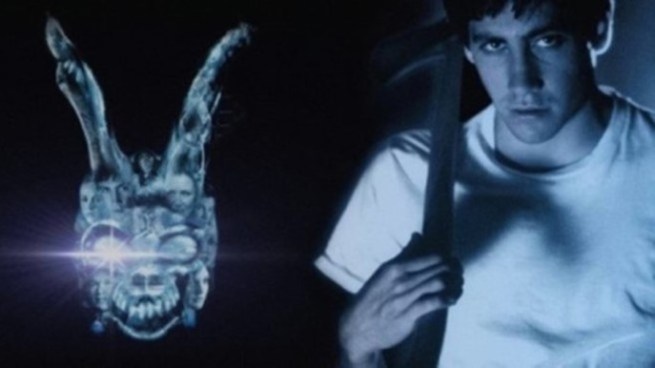
How many alienated-teenager-in-suburbia-time-travel-science-fantasy comedies can you name? Okay – there’s Back to the Future and its sequels. Add the adjectives horrific and surreal to that description, and Donnie Darko stands alone. And how many alienated movie teenagers must deal with a slick self-help guru and a six-foot rabbit named Frank (think Harvey, only vicious). It’s not entirely clear what’s going on in this strange movie, but that just adds to the fun.
C+ Contempt (1963)
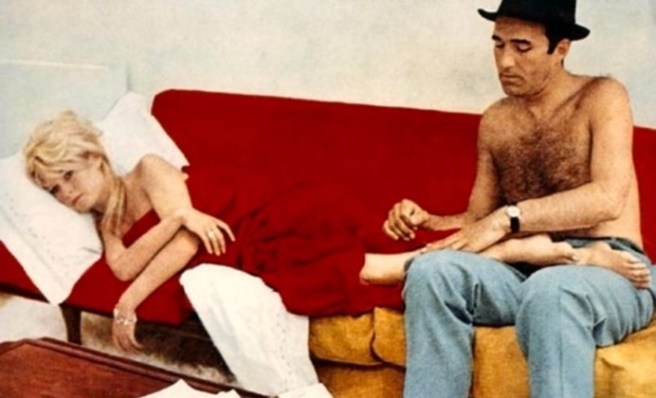
Jean-Luc Godard’s early movie about making movies isn’t very good. And it’s not even about making movies. The women worry mostly about their looks. The men spend most of their time treating the women badly. For most of the movie, a screenwriter (Michel Piccoli) fights with his wife (Brigitte Bardot). Jack Palance plays the producer who wants to film The Odyssey. This is the film where Fritz Lang, playing himself, says that CinemaScope is “only good for snakes and funerals.”
C+ The Raven (1935)

Another Universal horror flick starring Bela Lugosi and Boris Karloff. Lugosi plays a very mad scientist, while Karloff is a violent criminal who needs another face. Lugosi keeps torture devices in his basement, and apparently, he keeps them in very good condition. Why is it called The Raven? Lugosi’s character loves Poe’s work. The movie is short – just over an hour.
C Mystery of the Wax Museum (1933)

This pre-code horror movie starts terrifically, but after the prologue, it becomes stupid. Yes, there’s some sexy banter of the sort that would be outlawed in Hollywood only a year later, but there are far better and sexier movies of that time. If my memory serves, the 1953 3-D remake House of Wax is considerably better (which isn’t saying much). The most interesting thing about this movie is that it’s one of the last films shot in blue-less, two-color Technicolor.
D Svengali (1931)

John Barrymore overacts (as he usually did) as an evil and very competent hypnotist. He controls a beautiful woman to bring him money and fame. From what I’ve been told, it was based on a very anti-Semitic novel. Aside from Barrymore’s make-up (which isn’t all that bad), the film is not especially bigoted.
D- High Anxiety (1977)

Mel Brooks’ parody/homage to Alfred Hitchcock is wrong in almost every way. The plot, taken from Spellbound, never feels Hitchcockian, suspenseful, or funny. Brooks, who stars as well as producing and directing, lacks even the charisma to parody a leading man. Cloris Leachman and Harvey Korman, as the main villains, go so far over the top it kills the comedy. There are almost no attempts to use, or parody, Hitchock’s unique camera angles. I rarely laughed. If it wasn’t for one scene parodying The Birds – the only extended funny sequence in the movie – I would have given High Anxiety an F.
Other films you might want to see:
- The Age of Innocence
- Bram Stoker’s Dracula
- Freaks
- A Letter to Three Wives
- Laura
- Written on the Wind
- The Sting
These are not all of the films that will go away with 2023. Read the full list.

 Bayflicks