B+ Documentary
Directed by Ana Sofia Joanes
I hate reviewing didactic, political documentaries, even when I like them. I’m never sure if I’m judging them as works of art and entertainment, considering how well they make their argument, or simply reacting to whether I agree with the filmmakers’ very obvious point of view. And, of course, there’s always the issue that almost no one will see these movies unless they already agree with what they say.
So let me say right off that in the case of Fresh, I agree wholeheartedly with director Ana Sofia Joanes’s point of view. Large, corporate factory farms are a disaster, producing taste- and nutrition-impaired food while poisoning our land and water. True, they keep the cost of food down, but we pay for that down the road with higher medical bills and environmental degradation.
I should also mention that, unlike virtually everyone interviewed in Fresh, I’m a vegetarian. I’ve been one for more than 40 years, and my reasons are ethical. I drink milk and eat eggs, however, and I’d rather the cows and chickens that feed me lived on farms such as the ones pictured here, rather than the animal concentration camps where most milk and eggs are produced.
Okay. So much for my own views on the subject. What’s Fresh like as a film?
Very good, actually.
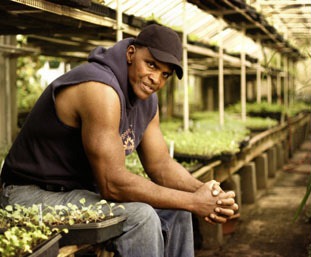 More about the solution than the problem, Fresh spends most of its short, 72-minute runtime introducing us to farmers, distributors, and supermarket managers who are making a difference. Farmers like Will Allen and Joel Salatin (pictured here) work with nature rather than fight it to produce the food they eat and sell.
Salatin shows us how he moves his cows from one field to another so they can dine on grass (a much more natural meal for bovines than the corn—often laced with dead cow parts—fed to 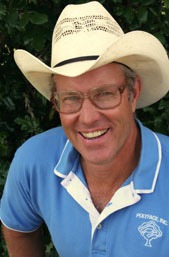 their siblings in factory farms). After the cows are done, he brings in the chickens, who clean up after the cows by eating the insects and larvae in the cow droppings. Allen, who comes off as more of an activist, uses his small, urban, three-acre farm to teach others how to grow food and appreciate fresher, more natural produce.
We also meet experts. Michael Pollan, author of Food Rules and The Omnivore’s Dilemma, explains the problems of mass farming and how the nutritional quality of produce has dropped in recent decades. He also attacks the one moral argument in favor of factory farms: slow, organic farming doesn’t produce enough food to feed a hungry world. Pollan mentions new statistics which prove that natural farming is actually more efficient. Unfortunately, he doesn’t go into detail about this—or perhaps Joanes left the details on the cutting room floor.
That’s too bad, because I would have liked to have read the argument. At this point, I still haven’t been sold on it.
Oddly, the filmmakers appear to have missed the one great and coincidental joke in the movie. In one sequence they introduce us to a corporate-style, horrible chicken farm…owned and managed by a Mr. and Mrs. Fox.

 Bayflicks
One thought on “Fresh”
Comments are closed.