
Near the end of both 2006 and 2008, I wrote Top Ten lists of very little value (you’ll find them here and here). They listed the best new films I saw at festivals over the past year that hadn’t received regular releases. These were, in a sense, lists of the best films of the year that you’d probably never get a chance to see.
But I discovered today that nine of those 20 films are currently listed on Netflix, with seven of them currently available. It’s not like seeing them in the theater, but they’re still worth seeing.
Adam’s Apples: The plot sounds like vapid, Hollywood, feel-good drek. But Anders Thomas Jensen’s tale of a hate-filled neo-Nazi who learns compassion with the help of an optimistic minister and some oddball eccentrics is actually the blackest of black comedies. That minister and those oddballs should be locked away for their own safety–and ours. On one hand, this is a profoundly religious picture, built on redemption and filled with miracles. On the other, I never laughed so hard at a man shooting a cat.
Forgiving Dr. Mengele: “Getting even has never healed a single person.” Auschwitz survivor Eva Mozes Kor devotes herself to keeping the memory of the Shoah alive, even running a small museum in her adopted home town. Yet the subject of this documentary has done something altogether remarkable, and controversial: She has publicly forgiven the mass murderers who killed her family and turned her childhood into a living hell.
In Bed: Before you’ve seen anything but credits, In Bed treats you to the sound of a very long orgasm. Then we meet two people who’ve just had incredible sex but don’t know what to say to each other. Eventually they say a lot. Writer Julio Rojas and director Mati as Bize catch the intimacy that casual sex can produce in near-total strangers in this talkie and erotic two-person character study. Available under it’s original Spanish title, En la Cama.
Au Bonheur des Dames: A silent film from 1930 is hardly a “new film,” but it made my 2006 list on the grounds of getting its first public Bay Area screening that year. If it wasn’t for the total cop-out of an ending, this Emile Zola adaptation about a giant department store and the people it displaces would equal The Crowd as the greatest serious drama of the silent era. This isn’t actually available on Netflix, but the title is up, meaning you can put it in your queue for when it becomes available.
The Art of Negative Thinking: This Norwegian comedy/drama is brutal, terrifying, and forces you to think about how you’d respond should disaster severely limit your life. It’s also devastatingly, hysterically funny, and the best movie I saw 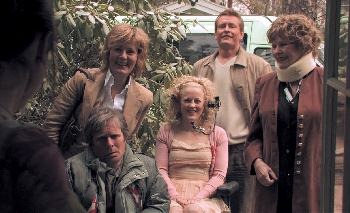 at at SFIFF in 2008. It addresses a subject that we’re not supposed to laugh at: the disabled and the fully-abled people who care for them. A mostly wheelchair-bound support group, led by an incompetent yet self-righteous social worker, come to the home of a potential new member. But Geirr, boiling with rage since a car accident paralyzed him from the waist down, doesn’t want to join. When he finds it impossible to ignore the group, he sets out to destroy it. This isn’t actually available on Netflix, but the title is up, meaning you can put it in your queue for when it becomes available.
Berkeley: I don’t know if anyone but a baby boomer can appreciate Bobby Roth’s look back at the radical end of the 1960’s; it may even require an East Bay Baby Boomer. But Berkeley progresses beyond nostalgia, examining the both the excitement and the shortcomings of youthful idealism.
Emotional Arithmetic: In the best performance of an excellent career, Susan Sarandon plays an American-born Holocaust survivor (the story is set in 1985) trying to 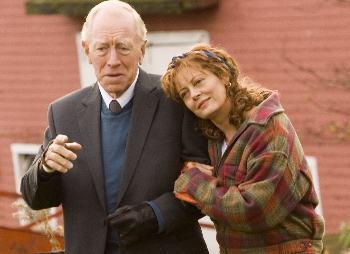 hold onto her family and her sanity. She’s overjoyed by the arrival of two old friends and fellow survivors, but their presence complicates her tricky relationship with her remote, sarcastic husband and their grown son–who appears to be devoting his life to caring for his messed-up parents. Beautifully written, designed, shot, acted, and edited, with a near all-star cast including Christopher Plummer, Gabriel Byrne, and Max Von Sydow. Read my full review. Released on DVD and available at Netflix under the dumber title Autumn Hearts: A New Beginning.
Idiots and Angels: Bill Plympton made a very bizarre, dark, and funny cartoon, which shouldn’t surprise anyone who knows his work. This story of a lonely, angry, and all-together rotten man (at one point he pushes a tear of empathy back into his eye) who inexplicitly sprouts angel wings will make you grimace as well as laugh. Dialog-free, Idiots and Angels reveals its characters by showing us their actions and their daydreams, which are mostly about money and undeserved glory. But no matter what their bearer may be thinking, the wings themselves insist on virtue. Plympton has created a dreadful world filled with dreadful people, yet allows something magical and wonderful to come out of it.
Katyn: In the spring of 1940, Soviet special forces massacred over 15,000 Polish prisoners of war, including the father of future filmmaker Andrzej Wajda. After 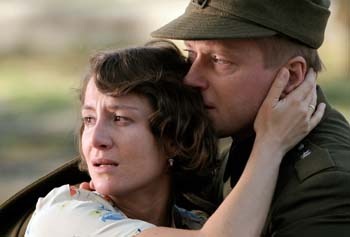 the war, Stalin’s government insisted that the Nazis were to blame and suppressed the truth. Wajda tells the story of the crime and the cover-up through a handful of fictitious characters in this visually gorgeous yet emotionally shocking historical epic. The second half, set mostly after the war, sags through too many characters you haven’t really gotten to know, but it’s still an amazing recreation of a largely-forgotten atrocity.

 Bayflicks