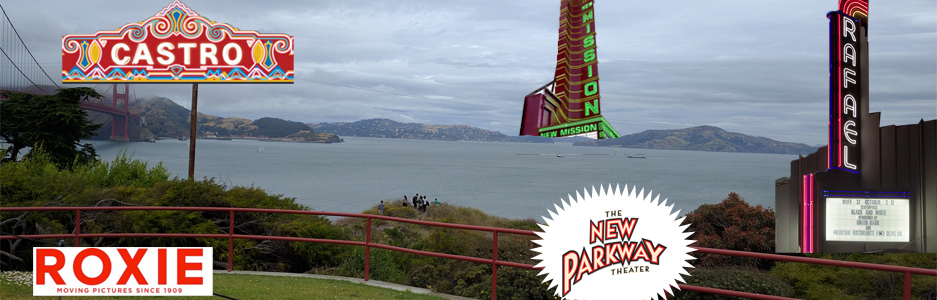
I may or may not get to more festival events, but yesterday was clearly my last full day devoted to this year’s San Francisco International Film Festival.
I started the afternoon with Peter Morgan, winner of The Kanbar Award for excellence in screenwriting. A respected writer of British television dramas, Morgan was unknown in this country only a few months ago (if you can realistically call any non-directing screenwriter known). But in February, both Best Performance in a Leading Role Oscars when to actors reciting Morgan’s words (Helen Mirren in The Queen and Forest Whitaker in The Last King of Scotland).
Author and film historian David Thomson interviewed Morgan in the Kabuki’s largest theater (which is also, unfortunately, the only one that doesn’t yet have extremely comfortable seats). Since Morgan has now written two films centering on the career of Tony Blair, Thomson asked if he’ll write a third, about Blair’s big career blunder–his support of George W. Bush’s Iraq war. Morgan hopes to, but he wants to wait another ten years or so to get a historical perspective. And when he writes it, he hopes Friar will direct it.
During the Q&A, I asked what he was thinking about when he wrote the ending of Last King of Scotland (I loved the movie but hated the ending). He told me that the final ending isn’t the one he wanted; that he’d written an epilogue that wasn’t shot for budgetary reasons. I doubt that would have helped my problem with the ending, which I felt was a moral cop-out that bordered on racist cliché. But I didn’t want to say that there.
After the Q&A, the festival screened Morgan’s first Tony Blair movie, the made-for-TV drama The Deal. (If The Deal had been a big Hollywood release, Mirren would have won her Oscar for The Deal II: Death of a Princess.) The Deal concentrates on Blair’s partnership with Gordon Brown when both young, ambitious Labour MPs. It’s set over many years, and ends with Brown’s agreement to support Blair’s bid for Prime Minister. It’s a good film, but left me a bit blank. I suspect one would need to know more than I do about recent British history, and their version of democracy, for this one to make sense.
I followed The Deal with The 12 Labors, a very good Brazilian film following a teenage ex-con’s first day with a straight job as a messenger boy. Director/co-writer Ricardo Elias concentrated on the interesting little challenges of the job while I sat in the audience waiting for something horrible (someone stealing his motorcycle; his former partners in crime going after him) to get the plot moving. Oddly, I was glad that it never did. The title, by the way, refers to the Hercules myth, and although the title character (the excellent Sidney Santiago) is named Hercules, I didn’t see the connection.
After The 12 Labors, a little rest, and a 40-minute wait for a bus, I arrived at the Castro for Notes to a Toon Underground, a collection of animated shorts accompanied by live music. With the exception of the opening “Cameraman’s Revenge,” a pre-revolutionary Russian comedy starring insects, the movies were all relatively new. The music was very new, often strange and heavily synthesized. I liked it more in parts than as a whole.

 Bayflicks