Fifty years ago, Hollywood desperately needed to tempt people away from their TVs. They turned to bigger, wider techniques for shooting and presenting movies. A lot of formats were tried, but only one survived for 40 years as a way to make that movie at that theater an extra-special treat: 70mm. The Castro‘s second 70mm Series, starting next Friday, gives us a rare chance to enjoy big movies on a big screen, projected from a very big piece of film.
A quick, technical and historical explanation: There was 70mm in the silent era, and Imax uses 70mm film today. But when film buffs talk of 70mm, we generally mean a specific presentation standard introduced with the Todd-AO format and the movie Okalahoma in 1955. Except for revival showings, that type of 70mm died in the mid-1990’s.
Todd-AO films were shot on 65mm film and only presented theatrically in 70mm; the additional five millimeters were for six tracks of high-quality magnetic sound. Some 40 big-budget movies were made that way, not always with the Todd-AO brand name, over the next 15 years. 65mm production was all but dead by 1971, but 70mm blow-ups of films shot in 35mm enjoyed huge popularity from the late 1970’s until digital sound robbed the format of  its audio (but not its visual) specialty. For more on the technology and history, see the Todd-AO, Super Panavision 70, and Ultra Panavision sections of Martin Hart’s American Widescreen Museum. You’ll also find informative articles at in70mm.com.
The Castro put together an exceptional series this year, with 12 films–nine shot in 65mm–that illustrate how filmmakers used the large format to show off the big and the beautiful. These 12 films include the third film released in the still-new format (South Pacific) and the very last one (Titanic), three of only five American films shot in 65mm in the last 35 years (Tron, Baraka, and Kenneth Branagh’s Hamlet), the two longest films ever released theatrically by major American studios (Cleopatra and Hamlet), two films that cost more than any film before them (Cleopatra and Titanic), the Bay Area’s first anamorphic Ultra Panavision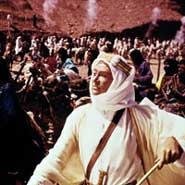 presentation in 40 years (It’s a Mad Mad Mad Mad World), the current box office champ (Titanic), two Best Picture Oscar winners (Lawrence of Arabia and Titanic), and two pictures that frequent "Greatest Films of All Time" lists (Lawrence of Arabia and 2001: A Space Odyssey).
My sources at the Castro promise no faded prints this year. Although the oldest movie is from 1958, the oldest print is from 1984, after slow-fade stock was introduced.
No 70mm this week, but we have some good films in 35mm (and even on DVD).
 Recommended: An Inconvenient Truth, Lark, opens Friday. If Al Gore had been this charming and funny in the 2000 election, the world would be a better place. Basically a concert film of a multimedia slideshow, An Inconvenient Truth explains the science and dangers of global warming in a manner so clear, concise, and entertaining that it can enthrall a ten-year-old (and I know because I saw it with one). I’m generally skeptical about political documentaries as a force for good, but if it’s possible for a movie to have a major, positive effect on the human race, this is the one.
Not Recommended: Superman Returns, Balboa, ongoing. Back in 2000, Bryan Singer turned the comic book superhero movie into art with X-Men, combining an intriguing concept, political symbolism, emotionally believable characters, and great action sequences. So it’s a big disappointment that he fails so utterly with the most famous superhero of them all. The big problem is in the casting; it takes someone special to make you believe in their powers and care about their inner demons. His Superman, Brandon Routh, is anything but special. Kate Bosworth’s Lois Lane is a perfect match for Routh; she’s lousy, too. The great special effects and Kevin Spacey’s wonderful turn as Lex Luthor help, but not enough to fill a 152-minute movie. On a double-bill with Lady in the Water.
Not Recommended: Cars, Elmwood, opening Friday. So much for the animation studio that could do no wrong. Pixar’s first bad movie suffers from two inexcusable faults. First, the protagonist is neither likeable nor interesting, despite being voiced by Owen Wilson, who is quite capable of being both. And second, the 116-minute picture is too long for its few laughs and predicable characters. Cars lets the mind wander, and mine wandered towards some very basic problems with the premise that wouldn’t have bothered me in an entertaining movie.
 Not Recommended: Azumi, 4Star, opens Friday. Does the world really need a self-consciously hip samurai movie? The young fighters in Azumi use words like "cool" (at least in the English subtitles) and fight to electronic, semi-rock music. That would be forgivable if the characters and story were interesting, but it’s hard to care about a group of youthful government assassins with a master who tests his students by ordering them to kill their best friends. (The youngsters occasionally question such orders, but never enough to rebel.) Nor is there much to like about the endless, Hong Kong-inspired fights, filled with the now clichéd flying people and overloud sound effects, all washed down with more gushing blood than a busy day in a slaughterhouse.
Recommended: On Native Soil: The Documentary of the 9/11 Commission Report, Roxie, opens Friday. The attacks of that day were a horrible, deeply personal tragedy for thousands of people. For many of the survivors and those who lost loved ones, the pain is sharpened by the disorganization and ineptitude of just about every organization involved (with the unfortunate exception of al-Qaeda).  We get to know some of those living victims in Linda Ellman’s documentary, which also details the mistakes and broken systems that worsened this already horrible atrocity. Ellman’s TV roots show up in unfortunate ways; fast editing synced to an overly emphatic musical score gives On Native Soil the desperate-not-to-bore feeling of an E! biopic. But the documentary still gives you as clear, complete, and emotionally resonant a view of that day as you can get in two hours.
Recommended: Four Weeks in June, Rafael, Saturday, 6:45. An alienated young woman in trouble with the law befriends an old woman with a secret past. By keeping close to the dark edges of both characters, writer/director Henry Meyer avoids the story’s obvious sentimentality and gives us two wounded souls in search of healing. Think of it as Mrs. Palfrey at the Claremont with fully-developed human beings. Part of the Jewish Film Festival.
Recommended: Indiana Jones and the Last Crusade, Ross Common, Saturday, 8:00. I agree with common wisdom: Raider of the Lost Ark is a masterpiece of escapist action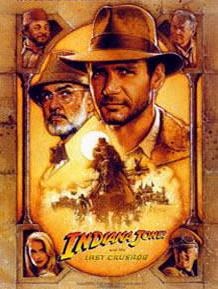 entertainment. But I split with the herd on this second sequel; to my mind, it improves on near-perfection. The action sequences are just as well done, but the pacing is better; this time Spielberg knew exactly when to give you a breather. Best of all, adding Sean Connery as the hero’s father humanizes Jones and provides plenty of good laughs. Just don’t confuse The Last Crusade with the wretched Indiana Jones and the Temple of Doom. And don’t confuse this DVD presentation by Film Night in the Park with the real Indiana Jones–at least in 35mm but preferably 70mm–experience.
Recommended: Strangers on a Train, Stanford, Saturday through Monday. One of Hitchcock’s scariest films, and therefore one of his best. A rich, spoiled psychotic killer (the worst kind) convinces himself that a moderately-famous athlete has agreed to exchange murders. The athlete soon finds himself hounded by suspicious cops who think he’s killed his wife and a psycho who thinks the athlete owes him a murder. On a double bill with Rebecca, the only Hitchcock movie to win a Best Picture Oscar.
Recommended: Local Call! Roda Theatre, Berkeley, Saturday, 9:30; Rafael,  Monday, 8:45. What’s scarier than your dead father calling constantly from beyond the grave? The phone bills. That’s what Sergio Castellitto discovers in this very funny French comedy that app ears to be inspired by the Book of Job. As his father (voiced by Michel Serrault) continues to harass him about a coat, and the phone bills send him into poverty, every other aspect of his respectable, middleclass life falls apart. Director/co-writer Arthur Joffé meditates hilariously on memory, communication, Jewish spirituality, and the precariousness of our comfortable lives. Part of the Jewish Film Festival.
Recommended: Forgiving Dr. Mengele, Rafael, Sunday, 12:00 noon. "Getting even has never healed a single person.– I didn’t think there was anything new for a Holocaust documentary to say, but then I’d never before seen one about Eva Mozes Kor. A survivor of Mengele’s notorious "experiments– at Auschwitz, and now a real estate agent in Indiana, Kor devotes herself to keeping the memory of the Shoah alive, even running a small museum in her adopted home town. Yet this feisty little woman has done something altogether remarkable, and controversial among survivors. She has publicly forgiven the mass murderers who killed her family and turned her childhood into a living hell. An expertly-made documentary about a remarkable human being. Part of the Jewish Film Festival.
 Recommended: Alien, Parkway, Tuesday, 9:15. In 1975, Jaws broke box office records. Two years later, Star Wars jumped light years over Jaws’ grosses. Is it any wonder that Hollywood would soon put a scary, carnivorous creature on a spaceship? No, the wonder is that screenwriter Dan O’Bannon and director Ridley Scott did such a great job. First, they created the most realistic space jockeys yet to grace movie science fiction–eight working-class astronauts who talk about their contract and complain about the food. Then they placed them on a ship that seemed both believable and creepy. Finally, they added a difficult-to-see, constantly changing, and very hungry monster with a talent for camouflage. And let us not forget Sigourney Weaver in the role that made her a star. A benefit for the Chiapas Support Committee.

 Bayflicks