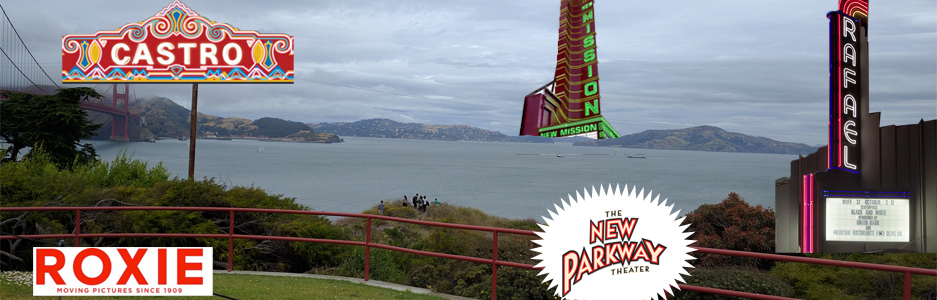
Friday Night Report: Rare Hitchcock and New Studio Ghibli

I caught two very different movies at two very different theaters, Friday night. Both films were very much worth catching.

The Wrong Man

The Pacific Film Archive has been running its Alfred Hitchcock series since January, but it took me until Friday to actually get to one of the screenings. I’m really glad I went.

Hitchcock made The Wrong Man at the height of his powers. His next three films would be Vertigo, North by Northwest, and Psycho. Like Vertigo, The Wrong Man was a critical and commercial flop on it’s original release. Unlike Vertigo, it has remained obscure. Now that I’ve finally seen it, I know that it deserves a better reputation.

Although it uses one of Hitchcock’s favorite plots–the innocent citizen imagewrongly accused of a crime–it’s unlike anything he ever made. Based on a true story and apparently following it quite closely, it realistically shows you the reality of that situation. Manny, a professional musician with a steady, modest-paying gig (Henry Fonda), doesn’t escape from life-threatening adventures, track down evil spies, or meet and romance a glamorous blonde. He gets fingerprinted and put in jail. He gets out on bail, and hires a lawyer he probably can’t afford. His wife (Vera Miles–who is a gorgeous blonde) has a nervous breakdown.

Even Hitchcock’s cameo is different than any other. The film opens with him, in long shot and shadow, directly addressing the audience, and telling them this is unlike any of his other thrillers.

And yet, in many ways, this is very much an Alfred Hitchcock movie. Right from the start, as Manny leaves work in the wee hours of the morning, takes the subway home, and talks about money with his wife, Hitchcock’s sense of camera angles, editing, and sound provides an overwhelming sense of dread.

In many ways, this is one of his scariest movies. We know that we will never be mistaken for a spy, or discover that a favorite uncle is a serial killer, or be attacked by huge flocks of crows. But if we’re sufficiently unlucky, we might actually someday be arrested for someone else’s felony. And even if we’re eventually proven innocent, the experience could have lasting emotional and financial effects.

Warner Brothers provided the PFA with a seriously scratched print that has seen better days. Good thing this was a black and white movie; at least the print wasn’t faded.

From Up on Poppy Hill

From the PFA on the UC Berkeley campus, I walked west to downtown Berkeley’s California Theater, where I caught the latest animated feature from Japan’s fabled Studio Ghibli. It was a very special screening.

Like all Ghibli films, From Up on Poppy Hill has been dubbed into English for its wide American release. But for this week, the California and Embarcadero are showing the original Japanese version–with English subtitles–for the last screening of the day.

That’s well worth catching.

Set in the early 1960s, From Up on Poppy Hill can best be described as whimsical. A dramatic comedy about first love, it focuses on a teenage girl falling on love for the first time, against a backdrop of students trying to save an old, rundown clubhouse.

This is a warm, sweet, nostalgic, and mild movie without villains or real disasters. Frightening things have happened in the past, and the scars of war–although no longer on the buildings–are still in everyone’s hearts and family histories.

Of course first love never runs smooth. This young couple run into obstacles, one of them serious enough to derail a romance.

imageThis is the rare animated feature without talking animals, fantasy creatures, magic, or broadly caricatured human beings.

Which brings up an interesting question: Why bother with animation? Why not tell the story with live action?

Two reasons:

First, because hand-drawn, 2D animation is with Studio Ghibli does, and does better than anyone else these days.

And second, because they can do so much with it. With astonishingly simple brushstrokes, the Ghibli artists can evoke a place, a community, and a human face’s emotion. It’s a joy to watch.

Catch this picture–preferably in the subtitled version.

Unfortunately, the California is screening From Up on Poppy Hill on one of their upstairs theaters–once part of this aging palace’s balcony. The screen is small, and the sightlines off. Worse, when something loud happens in the big downstairs auditorium, you hear it upstairs.

Other than these problems–which existed when the theater screened film–I had no complaints about the digital projection.

Saturday at Noir City

Yesterday (Saturday) was a beautiful day, so I spent most of it at the Castro, enjoying two dark double bills–all part of the ongoing Noir City festival.

Out of these four feature films, I watched two ex-cons re-entering society, four violent crimes turn out really bad for the perpetrators, two people jump to their deaths, multiple car and truck chases, and I’m not  sure how many murders.

Oddly enough, I didn’t see a single femme fatale, despite the presence of Gun Crazy’s Peggy Cummins in the first two films.

But a more important talent snaked through these four pictures: Cy Endfield. He wrote or co-wrote the first two films screened, and directed the third (and best).

First Double Bill: Peggy Cummins Tribute

Both of these films were released in 1957, after Cummins abandoned Hollywood for her native Britain. In other words, they were English, rather than American, noir.

Curse of the Demon
To my mind, this supernatural thriller doesn’t really qualify as noir, since the evil comes from something other than human weakness. But that doesn’t disqualify such a thriller as entertainment. Dana Andrews stars as an American scientist who comes to England to debunk a Satanic cult. And if you think he’ll be proven right, you haven’t seen enough movies.

For the most part, it’s a likeable and thoughtful thrill ride, with a great villain and some truly scary moments. But two major problems, both added in post production, make it a worse movie than it should have been. First, the producers replaced the scary, unseen demon originally planned with a laughably bad monster special effect. Second, composer Clifton Parker overdid the musical "fright" stingers  until they became funny, then annoying, then funny again.

One problem can’t be blamed on post production: Andrews’ hero comes off as kind of a dick.

Hell Drivers
Now this one was more like it! An ex-con looking for honest work (Stanley Baker) gets a job driving a truck. Sounds good, except that the company he’s working for insists on dangerously fast driving, encourages the drivers to compete with each other, and takes no responsibility for the results. Loud and suspenseful, Hell Drivers examines machismo and the way it can be used to exploit working-class men.

In addition to Baker and Cummins, Hell Drivers contains a number of future stars, including three of what would be the biggest names is the ’60s spy craze: Patrick McGoohan, David McCallum, and the biggest of all, Sean Connery (in a very minor part).

One complaint: Hell Drivers contains a character of the sort that I call dead meat–someone who is sympathetic but will obviously not survive for the fade-out. I call such characters "dead meat" after a parody of this type in Hot Shots. Always a nice guy, dead meat characters inevitably befriend the hero, and have their fates clearly telegraphed to the audience beforehand.

One technical note: Hell Drivers was the first black and white VistaVision film I’ve ever seen. But despite the extra-large negative, it looked no better than any other black and white movie from 1957–and worse than many. According to Martin Hart’s invaluable American WideScreen Museum, "the infrequent black & white VistaVision films didn’t seem to gain much by the use of a large format negative."

Second double bill: Nancy Mysel Tribute

The Film Noir Foundation doesn’t only honor movie stars. Film preservationist and restoration expert Nancy Mysel died last year of cancer, and last night the festival honored her with two films she had helped restore.

These were both 35mm, photochemical, analog restorations rather than digital ones. I talked to Noir City’s head honcho, Eddie Muller, about digital vs. analog restorations after the movies. He’s not against digital (several of this year’s films will be screened off DCPs), but these two were in good enough condition to allow them to use less expensive analog processing.

Try and Get Me (aka: The Sound of Fury)
Easily the best of the four films I saw yesterday, Try and Get Me (originally titled The Sound of Fury) easily sits among the best noirs ever made. Based very loosely on the same 1933 San Jose lynching that inspired Fritz Lang’s Fury and the recently disappointing Valley of the Heart’s Delight, it follows a decent but flawed man as he sinks into crime and then faces a murderous mob.

Howard (Frank Lovejoy) has a son and a pregnant wife to support, but not a job. He also has a drinking problem. In other words, he’s a deeply sympathetic protagonist, but not someone you’d want to depend on.

Then he meets Jerry (Lloyd Bridges in a brilliantly over-the-top performance), who seems to have plenty of cash. Soon they’re robbing cash stations and liquor stores. Then Jerry leads him into deeper waters, with a kidnapping that turns into a particularly grisly murder (or at least as grisly has was allowed in a 1950 Hollywood film). Step by step, their capture becomes inevitable.

But a local journalist has been whipping up hatred for these two "animals," and the large crowd that gathers around the police department isn’t willing to wait for a trial. The horrible crimes committed by two unhinged men become the nucleus of another crime–this one committed by almost everyone.

Director Cy Endfield fills the story with remarkable performances. Not just Lovejoy and Bridges, but in minor characters, as well. Katherine Locke gives a particularly touching performance as a lonely spinster. The crowd and lynching scenes have a remarkable immediacy.

My one complaint: There’s a minor character who clearly exists to express the film’s themes. He’s annoying and unnecessary. Fortunately, he’s seldom seen.

The Hoodlum
Noir is often quick, violent, and cheap. Those three words best describe the last film of the evening. Three other words also describe The Hoodlum: a guilty pleasure.

Lawrence Tierney plays the title character–a young man and hardened criminal who gets out of prison with no intention to go straight. He asks for a receives no sympathy from the people around him or from the audience, and badmouths the suckers willing to work for a living. Reluctantly working in the family gas station, he plans and organizes a daring armored car robbery. You know that’s not going to go well.

In the film’s short 61 minutes, he pretty much ruins the lives of everyone near him. That makes for an enjoyable time.

Noir City continues through February 3.

Images courtesy of the Film Noir Foundation.

Kansas City Confidential

One man conceives of the perfect crime, then brings three hardened criminals in on it. Everything goes smoothly, with an innocent bystander taking the wrap. But when that bystander is released for lack of evidence, he has business to attend to.

I just watched Kansas City Confidential, at home, on Blu-ray. I found it to be a tight, taut, well-made film noir. It was made in 1952, as the genre was reaching its pre-self-awareness peak.

Great name for a noir, isn’t it: Kansas City Confidential? The problem is that only the first act is set in Kansas City. The bulk of the story takes place in a reasonably nice resort in Borados. That’s a strangely pleasant setting for any noir, let alone one called Kansas City Confidential.

Despite the problems with the localation and name, it’s worth catching. You’ve probably never heard of director Phil Karlson or any of the screenwriters, but they knew their business. The plot starts simple, becomes complex, and resolves well.

The picture contains some well-crafted suspense moments–especially one where a thug has to decide whether he’ll use a gun or throw it away. Editor Buddy Small increases the tension by holding several shots longer than normal. Story construction helps, too. Sure, if the thug doesn’t throw away the gun, his partner will be killed. But how much does this thug care about his partner’s life.

As in all good noirs, the moral issues aren’t always clear. A criminal can be a loving father who wants the best for his daughter. The hero can be a man with record going after stolen loot.

In one sense, the movie is surprisingly ahead of its time. The ingenue, played by Coleen Gray, is in law school, and no one seems to object to her professional ambitions.

As befits a 60-year-old low-budget B noir, the cast lacks star wattage. But the thugs include Lee Van Cleef and Jack Elam, two of the best bad guy character actors of the era.

I guess I can’t talk about this movie without referencing Reservoir Dogs. Let me just say that it’s clear that Tarantino knows Kansas City Confidential.

Watch it if you get a chance.

Follow

Get every new post delivered to your Inbox.

Join 49 other followers